
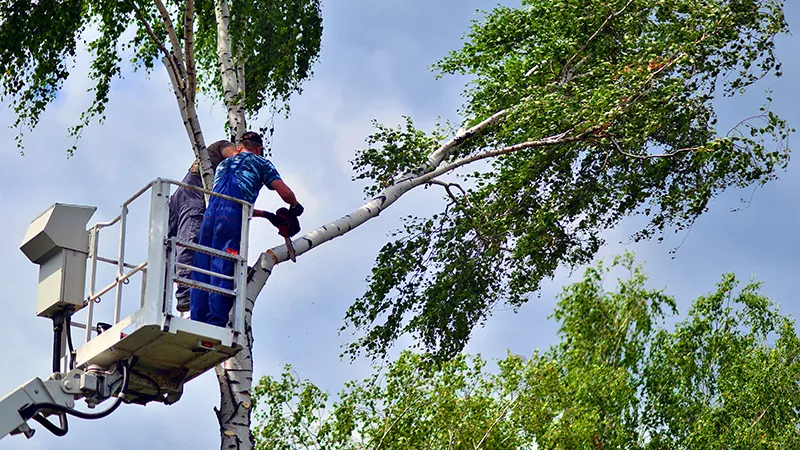

Tree problems rarely develop on a convenient timeline. A tree that has been showing signs of structural weakness for months can become an urgent safety situation overnight during a storm. A limb that was on an arborist’s ‘monitor closely’ list can fail suddenly and come down on a fence, a vehicle, or a structure. The difference between a managed inconvenience and a serious incident often comes down to how quickly a professional team can respond and how effectively they can work under time pressure.
Understanding what constitutes a genuine arboricultural emergency, and what to do when one occurs, is knowledge worth having before you need it rather than after.
What Constitutes a Tree Emergency
Tree emergencies typically fall into three categories. The first is immediate structural failure: a tree or large limb has come down, is resting on a structure or vehicle, or has partially failed and is hanging in a position where it could fall at any moment. The second is acute hazard: a tree has been assessed by a qualified arborist as presenting imminent structural failure risk that makes the surrounding area unsafe. The third is damage to critical infrastructure: a tree has fallen on or into powerlines, gas services, or other critical infrastructure that requires immediate management in coordination with the relevant service provider.
For genuine emergencies in any of these categories, tree removal Bendigo is a priority response service — teams attend with the equipment and qualification to make the area safe as quickly as possible.
Non-Emergency Urgent Work
Much tree work that feels urgent — a large limb over the house after a storm, a tree that has started showing signs of disease or structural concern — is actually urgent-but-not-emergency work. It should be attended to promptly by qualified professionals, but it does not require the same immediate response as a structural failure in progress.
For this category of work, scheduling a professional assessment promptly — rather than waiting for months until the next convenient window — is the appropriate response. A qualified assessment gives you an honest picture of the actual risk level, the appropriate response, and the timeline for intervention.
Full Tree Services for Proactive Management
Beyond emergency and urgent response, the full range of professional tree services exists to prevent emergencies from developing. A property with scheduled annual professional inspection and maintenance is a property where the conditions that produce tree emergencies are identified and addressed before they can develop into genuine crises. The investment in proactive professional care is a fraction of the cost of emergency response and subsequent damage remediation.
TBS Trees: Ready When You Need Them
TBS Trees provides both emergency response and scheduled professional services across Bendigo. Their team has the qualifications, equipment, and emergency response capacity to address urgent situations professionally, and the ongoing service commitment to help you build the proactive maintenance program that reduces the frequency of those urgent calls. Contact them for a same-day assessment whenever you have a tree situation that needs professional attention.