
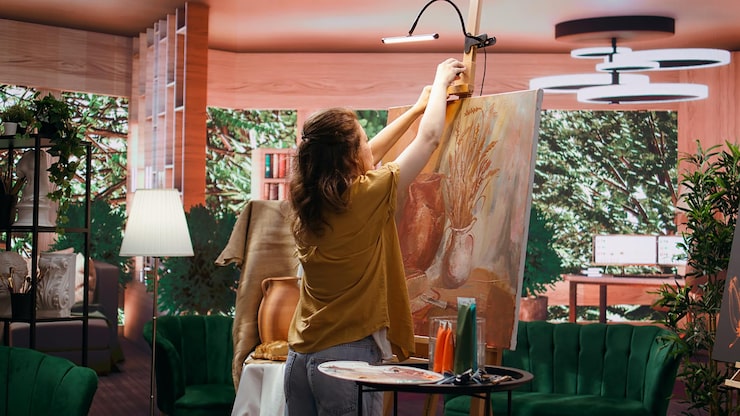

The Style That Requires More Discipline Than Minimalism
Maximalism is frequently misunderstood as simply ‘more of everything’ — more color, more pattern, more objects, more furniture. This misunderstanding is why maximalist design attempts so often go wrong: they accumulate without curating, and the result is visual chaos that exhausts rather than delights. Genuine maximalist design is actually more disciplined than minimalism in some ways, because it requires managing complexity rather than simplifying it.
The maximalist rooms that appear in design publications and that people consistently respond to positively share underlying structural principles that allow complexity to read as richness rather than disorder. Understanding these principles is what separates successful maximalism from accumulation with aspirations.
The Unifying Color Story
Maximalist rooms with many colors and patterns remain cohesive through a consistent underlying color logic. Often called a ‘color story,’ this is the set of hues and tones that appear throughout the room in different proportions and forms. A room might contain a dozen different patterns — floral, geometric, botanical, ethnic textile — but if every pattern contains some amount of the same blue-green and terra cotta, the room reads as a unified composition despite its complexity.
The practical test: lay samples of every textile, wallpaper, and significant object in the room on a white surface and photograph them together. If there’s a color thread connecting them all, the room will work. If they’re genuinely unrelated in color, the room will read as random regardless of how good each individual element is.
Pattern Mixing: The Rules That Allow Breaking Rules
Pattern mixing in maximalist design follows specific conventions that allow many patterns to coexist: vary the scale of patterns significantly (a large floral with a small geometric with a medium stripe reads as interesting; three medium florals compete), vary the character of patterns (geometric, organic, and abstract together work better than three versions of the same motif type), and maintain the color logic across all patterns.
The rule of thumb for beginners: mix one large-scale pattern, one medium-scale pattern, and one small-scale pattern in a room. This size variation creates the hierarchy that allows the eye to read each pattern individually rather than experiencing them as undifferentiated visual noise.
Furniture Density: Full Without Crowded
Maximalist rooms contain more furniture than minimalist rooms, but successful maximalist design still maintains clear circulation paths and functional zones. The difference between a full room and a crowded room is the presence or absence of these clear paths. A maximalist room where you can’t walk comfortably from the entry to the seating isn’t maximalist — it’s a storage problem with a style name applied to it.
Every piece of furniture in a maximalist room should be chosen and positioned with as much deliberation as in a minimal room — the criteria are different (richness rather than restraint) but the intentionality is the same. Pieces that don’t earn their position in the composition should be removed even in maximalist contexts.
The Editing Paradox
The most important skill in maximalist design is knowing what to leave out — which sounds contradictory for a ‘more is more’ aesthetic but is essential. Adding everything you like produces chaos; adding everything you love while removing everything that’s merely fine produces richness. The difference between a maximalist room that works and one that doesn’t is almost always the editing decisions: what was consciously left out, not what was included.
A useful maximalist exercise: every month, identify one thing in the room that’s reducing the overall quality of the composition and remove it. The discipline of subtraction applied to a maximalist space keeps complexity from tipping into chaos and keeps the room feeling like a curated achievement rather than accumulated possessions.