
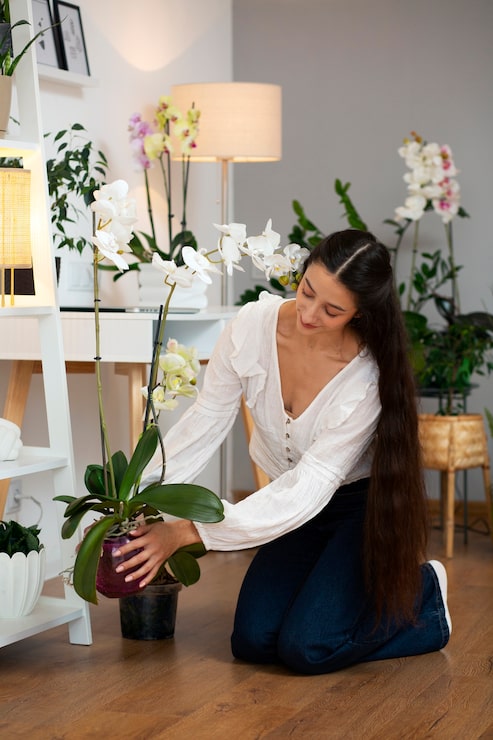

Growing Things in a Space Designed for People
Plants improve apartment living in documented ways — they improve air quality to a modest but real extent, they reduce stress and improve mood in the same way that any contact with living nature does, and they add warmth and life to spaces that are otherwise entirely architectural. The challenge in most apartments is providing the conditions that plants need: adequate light is the primary limiting factor, followed by consistent care in a busy household.
The plants that work in apartments without significant effort are a specific group — not the photogenic aspirational plants of design magazines, but the genuinely resilient ones that have earned their reputation through surviving neglect, low light, and the irregular attention patterns of people who travel, work long hours, and aren’t full-time gardeners.
The Low-Light Performers Worth Knowing
Pothos (Epipremnum aureum) is arguably the most apartment-appropriate plant available: it tolerates low light, infrequent watering, and general neglect better than virtually any other common houseplant. It trails attractively from shelves and hanging planters, grows vigorously in most conditions, and propagates in water from cuttings — one plant becomes many. The plant that apartment dwellers most often successfully keep alive is a pothos.
ZZ plant (Zamioculcas zamiifolia) stores water in its roots and underground rhizomes, making it exceptionally drought-tolerant. It grows slowly in low light with minimal water and holds its dark, glossy appearance consistently. The snake plant (Dracaena trifasciata) is the other well-known low-light survivor — upright, architectural, tolerant of neglect, and available in sizes from 6 inches to 4 feet. These three plants succeed where dozens of others fail in real apartment conditions.
Matching Plants to Your Specific Light
The most important selection criterion for apartment plants is the honest assessment of available light. A north-facing apartment in a city with tall neighboring buildings may have ambient light levels too low even for ‘low light’ plants without supplemental grow lights. A south-facing apartment with unobstructed sun has conditions that support a much wider range of plants.
The practical test: hold your hand at the plant’s intended position during peak daylight hours and observe the shadow. A sharp, clear shadow indicates bright light. A faint, fuzzy shadow indicates low to medium light. No shadow indicates very low light — the survival zone of only the most shade-tolerant species. Calibrate your plant selection to what this test shows rather than to what the room feels like to you.
Watering on a Schedule vs. Watering by Need
Calendar-based watering (‘water every Sunday’) is the most common approach to apartment plant care and one of the most reliable routes to plant death — because it ignores the actual water needs of the plant, which vary with season, temperature, light levels, and the plant’s growth stage. Watering by calendar produces overwatering in winter (when plants grow slowly and use little water) and potentially underwatering in summer.
Watering by need — checking soil moisture before watering and watering only when the appropriate depth is dry for that plant type — produces better results. The soil moisture check takes 5 seconds (push a finger 2 inches into the soil; if dry, water; if moist, check again in 2 days). This habit-based approach scales to any number of plants without requiring tracking.
The Grow Light Option for Dark Apartments
For apartment dwellers with genuinely low light conditions who want to grow plants that require more light than their windows provide, a small grow light setup is the solution that works. LED grow lights are now available in compact, aesthetically acceptable designs — clip-on desk fixtures, pendant-style hanging lights, and shelf-mounted strips — that don’t look like agricultural equipment and provide the full-spectrum light that plants need for photosynthesis.
A grow light on a timer (14–16 hours of light daily for most houseplants) supplements inadequate window light effectively. The plants that benefit most from supplemental lighting in low-light apartments: any herbs you’re trying to keep productive, tropicals like monstera and philodendron, and any plant that’s stretching toward the light source (etiolation) under window-only conditions